DKNet
DKNet.SlimBus.Generators
Roslyn incremental source generator that turns [CrudCreate]/[CrudUpdate]/[CrudAction]-attributed entity members into a full CRUD vertical slice — request records, SlimBus handlers, and minimal-API endpoint registration — for .NET developers building SlimBus-based services.
✨ Why use it?
- The entity method is the only feature code you write. Mark a constructor or method, and the request record, the handler, and the route appear at compile time.
- Generated slices are the same shape as hand-written ones. They implement the same
Fluentscontracts from DKNet.SlimBus.Extensions, so a generated and a hand-written feature sit in one pipeline with one set of interceptors. - Nothing to keep in sync. No scaffolding is written to disk, so a renamed parameter or a new
[Range]shows up in the request record on the next build instead of drifting. - Take over any operation at any time. Declare your own handler for a generated request and the generator steps aside, reporting an informational diagnostic rather than a conflict.
- Errors are compile errors. A missing DTO, a non-public member, two
[CrudCreate]s, or two members colliding on one route fail the build with a specific diagnostic id.
🚀 Quick Start
Use a .NET 10 web project.
dotnet new web -f net10.0 -n QsApi
cd QsApi
dotnet add package DKNet.SlimBus.Generators
dotnet add package DKNet.EfCore.DtoGenerator
dotnet add package DKNet.SlimBus.Extensions
dotnet add package DKNet.EfCore.Specifications
dotnet add package DKNet.AspCore.Extensions
dotnet add package Mapster
dotnet add package SlimMessageBus.Host.Memory
dotnet add package SlimMessageBus.Host.Serialization.SystemTextJson
dotnet add package Microsoft.EntityFrameworkCore.Sqlite --version 10.0.12
Add Product.cs, ProductDto.cs, and then replace Program.cs. Mark the entity members — this is the only hand-written feature code:
using System.ComponentModel.DataAnnotations;
using DKNet.EfCore.Abstractions.Attributes;
using DKNet.EfCore.Abstractions.Entities;

namespace Catalog;

public class Product : Entity
{
    private Product() { } // EF

    [CrudCreate]
    public Product([Required, MaxLength(100)] string name, decimal price)
    {
        Name = name;
        Price = price;
    }

    public string Name { get; private set; } = null!;
    public decimal Price { get; private set; }

    [CrudUpdate]
    public void UpdatePrice([Range(0, 1_000_000)] decimal price) => Price = price;
}
using Catalog;
using DKNet.EfCore.DtoGenerator;

namespace Api;

[GenerateDto(typeof(Product))]
public partial record ProductDto;
Then Program.cs — the full host wiring and a self-contained request — and run with dotnet run:
using System.Net.Http.Json;
using Api;
using Catalog;
using DKNet.EfCore.Specifications;
using Mapster;
using MapsterMapper;
using Microsoft.Data.Sqlite;
using Microsoft.EntityFrameworkCore;
using QsApi.Crud;                                        // {AssemblyName}.Crud
using SlimMessageBus.Host;
using SlimMessageBus.Host.Memory;
using SlimMessageBus.Host.Serialization.SystemTextJson;

var connection = new SqliteConnection("DataSource=:memory:");
connection.Open();

var builder = WebApplication.CreateBuilder(args);
builder.WebHost.UseUrls("http://127.0.0.1:0");

builder.Services.AddSingleton<IMapper>(new Mapper(new TypeAdapterConfig()));
builder.Services.AddDbContext<AppDbContext>(o => o.UseSqlite(connection));
builder.Services.AddScoped<DbContext>(p => p.GetRequiredService<AppDbContext>());
builder.Services.AddSpecRepo<AppDbContext>();          // DKNet.EfCore.Specifications

builder.Services
    .AddSlimBusEfCoreInterceptor<AppDbContext>()        // auto-save after a successful write
    .AddSlimMessageBus(mbb => mbb
        .AddJsonSerializer()
        .AddServicesFromAssembly(typeof(Program).Assembly)   // discovers generated + hand-written handlers
        .AddChildBus("Memory", mb => mb.WithProviderMemory().AutoDeclareFrom(typeof(Program).Assembly)));

var app = builder.Build();

await using (var scope = app.Services.CreateAsyncScope())
{
    var db = scope.ServiceProvider.GetRequiredService<AppDbContext>();
    await db.Database.EnsureCreatedAsync();
}

app.MapGroup("/products").MapProductCrud();             // generated extension method

await app.StartAsync();

using var client = new HttpClient { BaseAddress = new Uri(app.Urls.First()) };
var response = await client.PostAsJsonAsync("/products", new { name = "Coffee", price = 9.5m });
var dto = await response.Content.ReadFromJsonAsync<ProductDto>();
Console.WriteLine($"{(int)response.StatusCode} {response.StatusCode}: {dto}"); // 201 Created: ProductDto { Name = Coffee, Price = 9.5, Id = ... }

await app.StopAsync();

public sealed class AppDbContext(DbContextOptions<AppDbContext> options) : DbContext(options)
{
    public DbSet<Product> Products => Set<Product>();
}
Building with <EmitCompilerGeneratedFiles>true</EmitCompilerGeneratedFiles> set (and a <CompilerGeneratedFilesOutputPath>) writes the generated files above to that path for inspection — see Generate CRUD requests for the exact output.
🏗️ Architecture
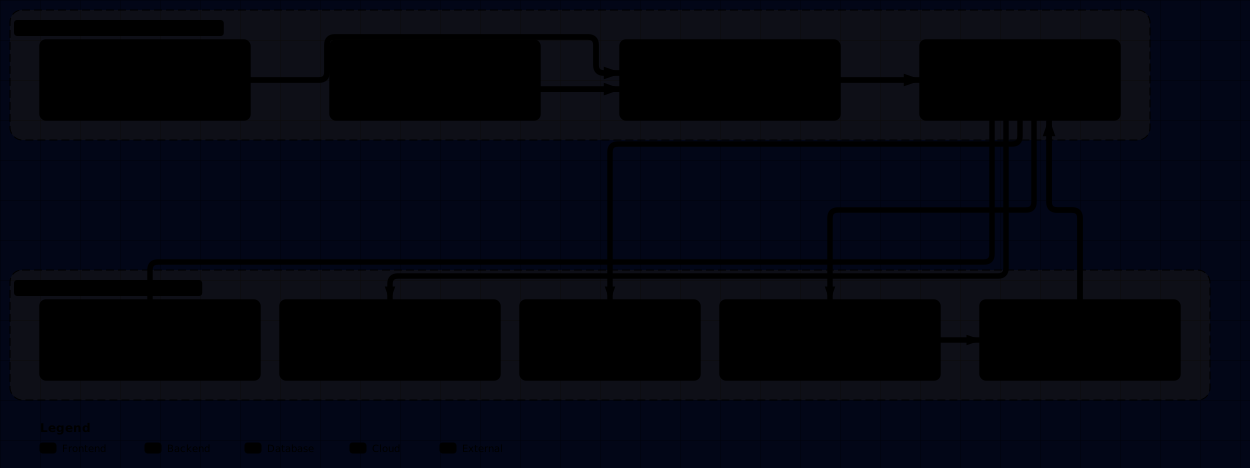
CrudGenerator runs once per compilation, inside the C# compiler — it never executes in the host process and ships no runtime assembly. Everything to the right of it in the diagram is ordinary generated C# that runs like any hand-written code, calling whatever IRepositorySpec, IMapper and bus registrations the host wires up. The diagram cannot show lifetimes or registration order — those come from the host’s own Program.cs.
🔄 How it works

The CompilationProvider.Select step re-runs CrudModelBuilder.Build on every compilation, because it reads the compilation as a whole rather than one file at a time. What it produces (CrudGenerationResult) is value-equatable, so the later RegisterSourceOutput step only re-emits source when that result actually changed — an edit that leaves every CRUD-relevant member and DTO untouched still costs a rescan, but not regenerated files. DTO resolution is scoped to the compiling project only — a referenced Domain assembly’s entities are scanned, but its [GenerateDto] types are not. Diagnostics other than DKCRUDGEN001/002/006 (member-level or route-level) do not stop the entity from emitting; see Read the generator’s diagnostics.
🧩 Features
- Generate CRUD requests from attributed members — Turn a
[CrudCreate]/[CrudUpdate]/[CrudAction]member and its resolved[GenerateDto]DTO into a request record. - Generate handlers, unless a hand-written one wins — Emit a dispatch handler per request, stepping aside for a hand-written
IHandlerwith the same request name. - Map CRUD endpoints — Compose
DKNet.AspCore.Extensionsmappers into oneMap{Entity}Crudextension, opt-in per project. - Name requests and routes — The fixed rules behind every generated type name, file name, route segment and route name.
- Refuse a delete — Hang a validation rule on the DELETE route through the generated
Delete{Entity}Request. - Expose domain actions — Publish a named operation at its own route with
[CrudAction], with or without a request body. - Read the generator’s diagnostics — What each
DKCRUDGEN0xxid means and whether it fails the build.
🔗 Related packages
- DKNet.SlimBus.Extensions — reach for it to write the slices this generator does not cover, by hand, in the same shape; it also supplies the request/handler contracts, auto-save and event publishing the generated code calls.
- DKNet.EfCore.Abstractions — reach for it for the
[CrudCreate]/[CrudUpdate]/[CrudAction]attributes (inDKNet.EfCore.Abstractions.Attributes) and theIEntity<TKey>every attributed entity must implement. - DKNet.EfCore.DtoGenerator — reach for it to declare the
[GenerateDto]DTOs this generator resolves against. - DKNet.EfCore.Specifications — reach for it for the
IRepositorySpecand by-id specification surface every generated handler uses. - DKNet.AspCore.Extensions — reach for it for the endpoint mappers and
CrudMapOptionsthe generated endpoint file composes.