DKNet
DKNet.EfCore.DtoGenerator
Generate DTO property declarations and validate event payloads at compile time for .NET developers.
✨ Why use it?
- Keep DTO property lists aligned with entities and inherited properties.
- Apply local and project-wide property selection without repeating lists on every DTO.
- Validate RaisesEvent declarations and generate convention-named payload records during compilation.
🚀 Quick Start
Use a .NET 10 console project. Install the packages, then replace Program.cs with the example.
dotnet new console -f net10.0 -n EfCoreDemo
cd EfCoreDemo
dotnet add package DKNet.EfCore.DtoGenerator
using DKNet.EfCore.DtoGenerator;

var dto = new ProductDto { Id = 1, Name = "Coffee", Price = 12m };
Console.WriteLine($"{dto.Name}: {dto.Price}"); // Coffee: 12

public sealed class Product
{
    public int Id { get; set; }
    public string Name { get; set; } = "";
    public decimal Price { get; set; }
}
[GenerateDto(typeof(Product))]
public partial record ProductDto;
Run with dotnet run.
🏗️ Architecture
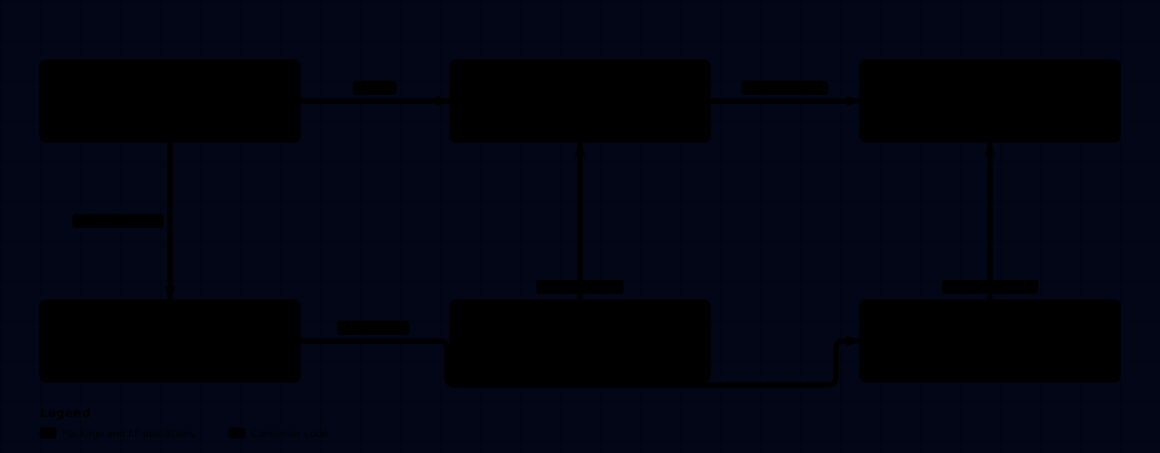
The generator is a netstandard2.0 analyzer running in the compiler process. The package compiles GenerateDtoAttribute source into the consuming assembly and exposes its MSBuild switches through buildTransitive props; generated types have no generator runtime service.
🔄 How it works
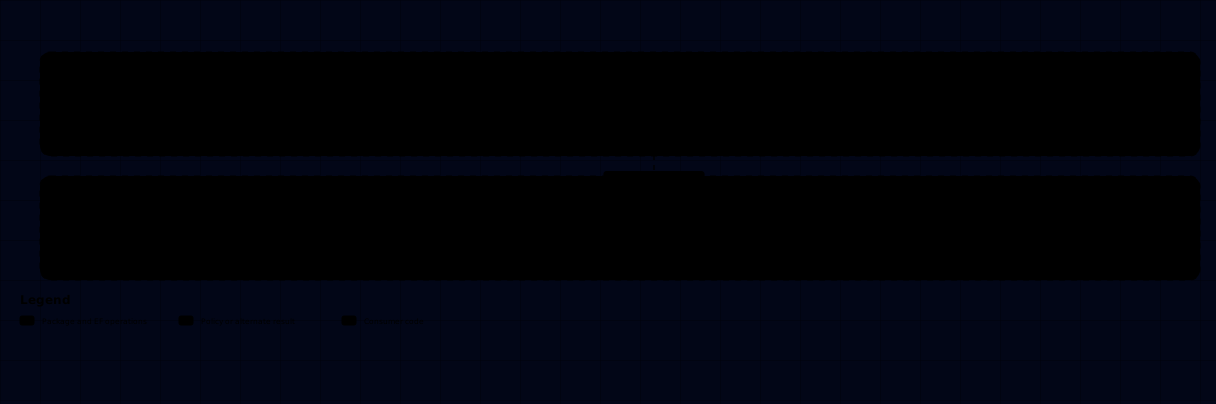
The source generator emits data properties, not mapping methods. Non-nullable strings become required; non-nullable collections shaped as an array, List<T>, IList<T>, ICollection<T> or IEnumerable<T> receive an = [] initializer (read-only and set collections do not), and retained complex references receive a null-forgiving initializer. Mapping remains the caller’s responsibility.
🧩 Features
- Generate DTO properties — Declare a partial DTO shell and extend its generated shape.
- Choose DTO properties — Set Include, Exclude and navigation-property defaults.
- Carry property attributes — Preserve validation and sensitive-data declarations.
- Generate and validate event payloads — Use RaisesEvent conventions and read compiler diagnostics.
🔗 Related packages
- DKNet.EfCore.Abstractions — use it for entity, SensitiveData and RaisesEvent declarations.
- DKNet.EfCore.Events — use it to dispatch the declared events after saving.
- DKNet.EfCore.Specifications — use it to project queries into generated models.
- Global Exclusions Guide — use it when configuring exclusions across a project.