DKNet
DKNet.AspCore.Idempotency.Relational
Internal EF Core storage machinery shared by the SQL Server and PostgreSQL idempotency providers.
✨ Why use it?
- Understand why SQL retries reserve through a unique index before handlers run.
- Inspect the shared row shape and expiry behavior used by both providers.
- Find which setup and migrations belong to the concrete provider.
🚀 Quick Start
This package is a transitive dependency of the SQL providers. Every type is internal; it exposes no application registration method. Install a provider to exercise it:
dotnet new web -f net10.0 -n PackageDemo
cd PackageDemo
dotnet add package DKNet.AspCore.Idempotency.Relational
dotnet add package DKNet.AspCore.Idempotency.NpgsqlStore
Set ConnectionStrings__Idempotency to a PostgreSQL connection string for a database the app can migrate. Then use this Program.cs and run dotnet run:
using DKNet.AspCore.Idempotency;
using DKNet.AspCore.Idempotency.NpgsqlStore;
var builder = WebApplication.CreateBuilder(args);
var connection = builder.Configuration.GetConnectionString("Idempotency")
    ?? throw new InvalidOperationException("Set ConnectionStrings__Idempotency.");
builder.Services.AddIdempotencyWithNpgsqlStore(connection);
var app = builder.Build();
app.MapPost("/orders", () => Results.Ok()).RequiredIdempotentKey();
await app.RunAsync();
POST twice with X-Idempotency-Key: order-1: the first returns 200 and the retry 409. The provider applies its migrations on host start.
🏗️ Architecture
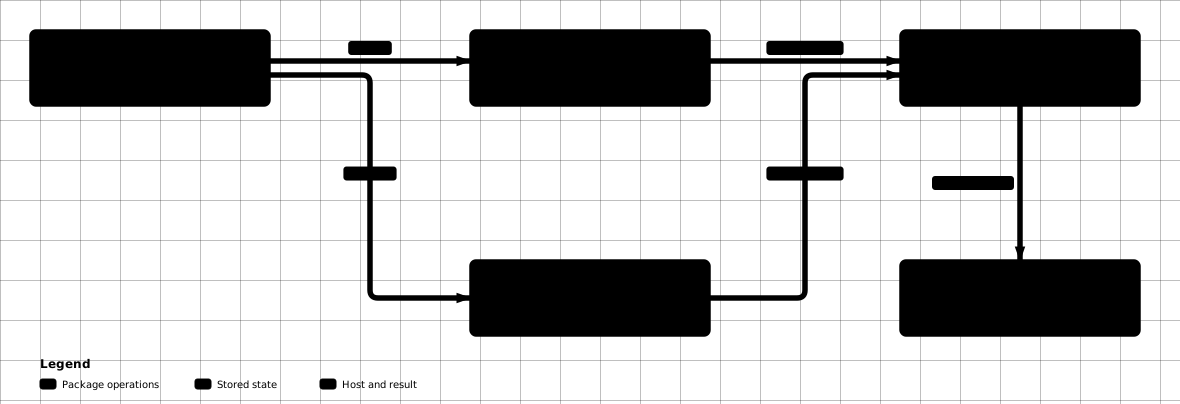
The public surface is empty. Application code registers a concrete provider; its singleton store holds a private async scope and uses a new EF context per operation.
🔄 How it works
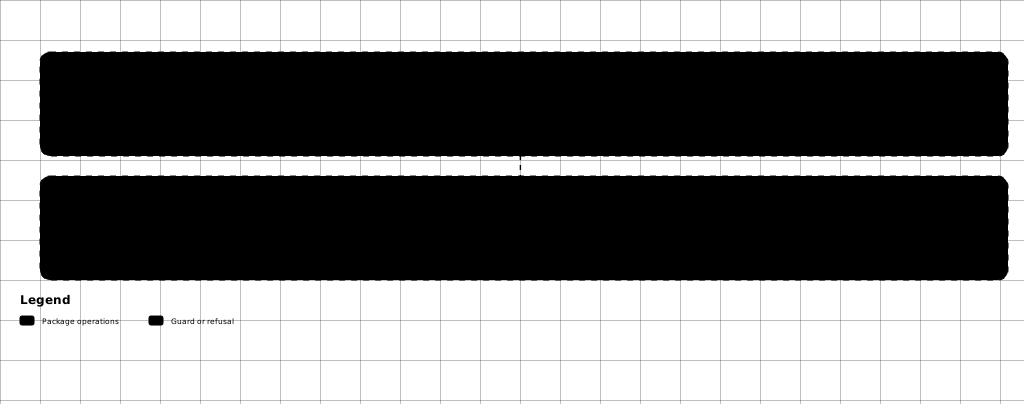
A successful insert returns new immediately. The unique-violation branch alone reads the blocking row. Neither expiry nor completion is a transaction with the application’s business writes.
🧩 Features
- Reserve and complete relational keys — Trace unique-index insertion, collision handling, and expired-row reclaim.
- Understand schema and migrations — Inspect shared columns, provider mappings, and migration ownership.
🔗 Related packages
- Idempotency — begin here for endpoint behavior and public contracts.
- MsSqlStore — select the SQL Server implementation.
- NpgsqlStore — select the PostgreSQL implementation.
- RedisStore — select a backend independent of this base.