DKNet
DKNet.AspCore.Idempotency.NpgsqlStore
A PostgreSQL ledger for .NET developers using DKNet minimal-API idempotency.
✨ Why use it?
- Share reservations across hosts using the same PostgreSQL database.
- Keep completed response data in a queryable table.
- Use the provider’s migrations and structured duplicate-key classification.
🚀 Quick Start
Use a .NET 10 ASP.NET Core project.
dotnet new web -f net10.0 -n PackageDemo
cd PackageDemo
dotnet add package DKNet.AspCore.Idempotency.NpgsqlStore
Replace Program.cs with the example, then run dotnet run.
Set ConnectionStrings__Idempotency to a reachable PostgreSQL database connection string. The account must be able to apply the packaged migrations.
using DKNet.AspCore.Idempotency;
using DKNet.AspCore.Idempotency.NpgsqlStore;
var builder = WebApplication.CreateBuilder(args);
var connection = builder.Configuration.GetConnectionString("Idempotency")
    ?? throw new InvalidOperationException("Set ConnectionStrings__Idempotency.");
builder.Services.AddIdempotencyWithNpgsqlStore(connection);
var app = builder.Build();
app.MapPost("/orders", () => Results.Ok(new { Accepted = true }))
    .RequiredIdempotentKey();
await app.RunAsync();
POST twice with X-Idempotency-Key: order-1. The first returns 200 and the retry 409. The ledger is shared by hosts using this database.
🏗️ Architecture
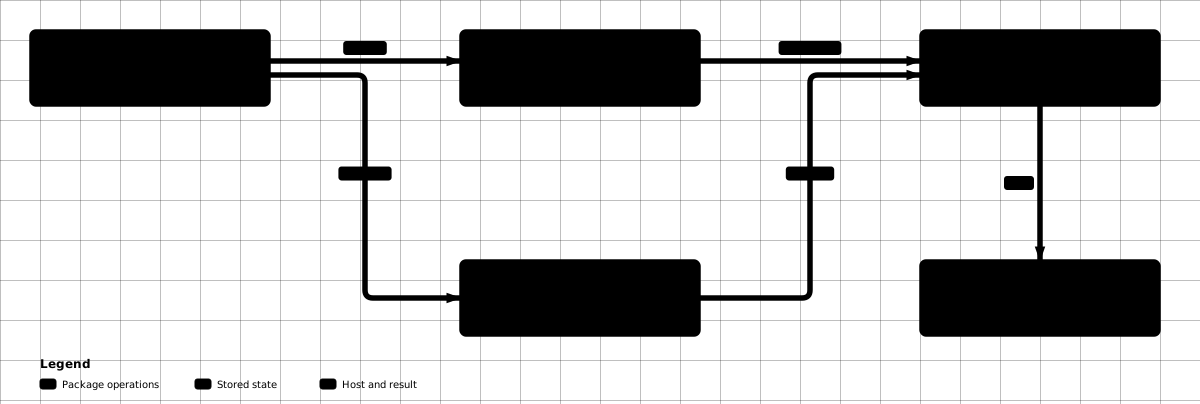
The provider registers a singleton store and factory, with fresh contexts per operation. The database is supplied by the application operator; startup applies this provider’s migrations.
🔄 How it works
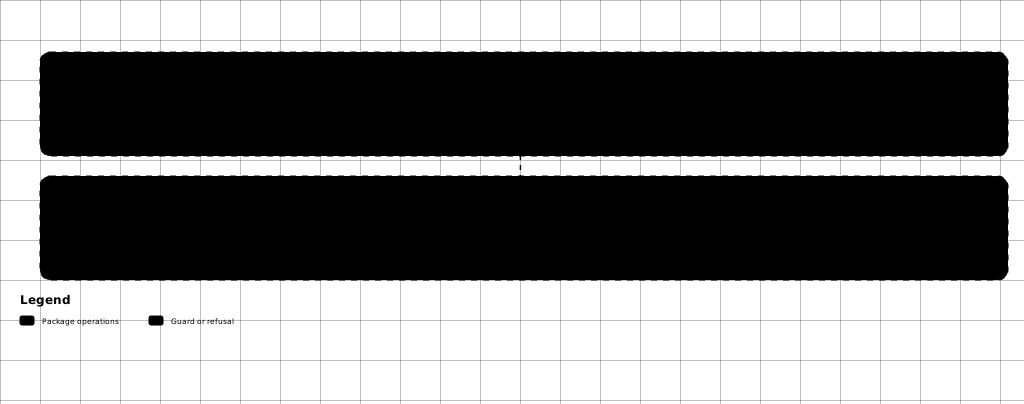
A live collision is a duplicate; an expired collision can be reclaimed by a conditional update. The core filter decides whether a result is cacheable. Expired rows are not automatically purged.
🧩 Features
- Register the PostgreSQL ledger — Register provider infrastructure and select the active key store.
- Persist reservations and responses in PostgreSQL — Trace provider persistence and find migration/tooling settings.
🔗 Related packages
- Idempotency — configure filters, keys and duplicate responses.
- Relational — inspect shared schema and concurrency.
- MsSqlStore — use the other SQL provider.
- RedisStore — use Redis TTLs instead of SQL rows.