DKNet
Reserve and complete relational keys
Part of DKNet.AspCore.Idempotency.Relational. The internal IdempotencyRelationalStore<TContext> implements the public core contract. An application selects it through a provider; it cannot derive from the base itself.
using DKNet.AspCore.Idempotency.NpgsqlStore;
using Microsoft.Extensions.DependencyInjection;
var services = new ServiceCollection();
services.AddLogging();
services.AddIdempotencyWithNpgsqlStore("Host=localhost;Database=idempotency;Username=app;Password=local-demo");
Each check creates a context from IDbContextFactory<TContext> and attempts to insert a status-102 reservation. A provider-classified unique violation triggers a lookup of the blocking row. A live row returns (true, null) while reserved, or the completed response. An expired row is reclaimed with an ExecuteUpdateAsync whose predicate still requires expiry; exactly one affected row grants the reservation. A losing reclaimer reads the current state and returns a duplicate.
Completion updates status, body, content type and expiry directly. It preserves the reservation’s CreatedAt. If no row remains it attempts an insert; a classified duplicate on that fallback is logged and swallowed. Other database failures propagate to the caller.
The shared store owns an async DI scope for its lifetime and creates a fresh context per operation. It is disposed asynchronously with its scope.
⚙️ Configuration reference
The store reads InFlightReservationTimeout from the core retention settings. It does not read CachePrefix. The filter supplies completed-response expiry.
🧱 Where it fits
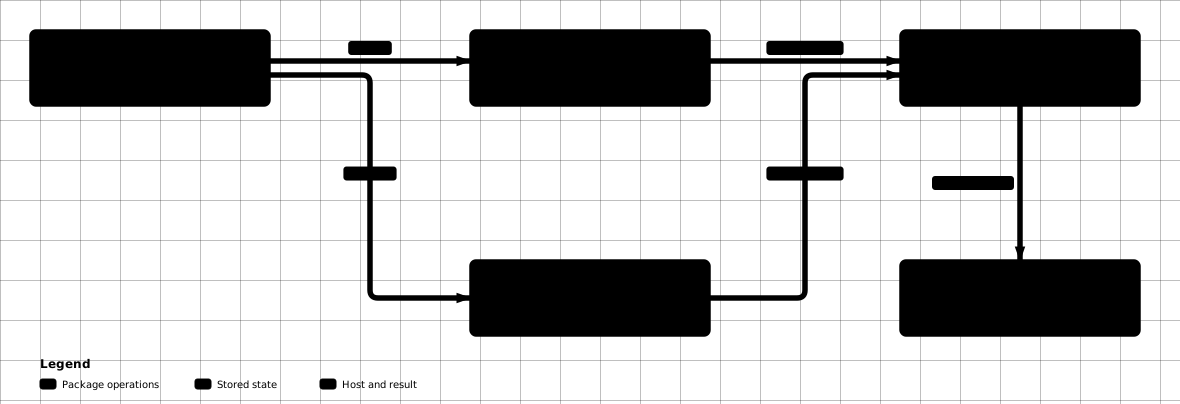
The package overview shows the host registrations and dependencies behind this capability. The core filter and selected store have separate responsibilities.
⚠️ Gotchas & limits
UX_CompositeKeymust exist in the database. It is the fresh-reservation concurrency guard.- A handler can outlive its reservation. Completion is keyed by the composite hash and carries no owner token.
- A row may be reclaimed after expiry; it is not automatically deleted. There is no cleanup worker.
- The shared classes and provider contexts are internal. An external provider implements the core interface instead.